Maonyesho
Behind the Scenes of a Venue: Running a Hall During an Exhibition
Loise Nyokabi · Oct 12, 2026
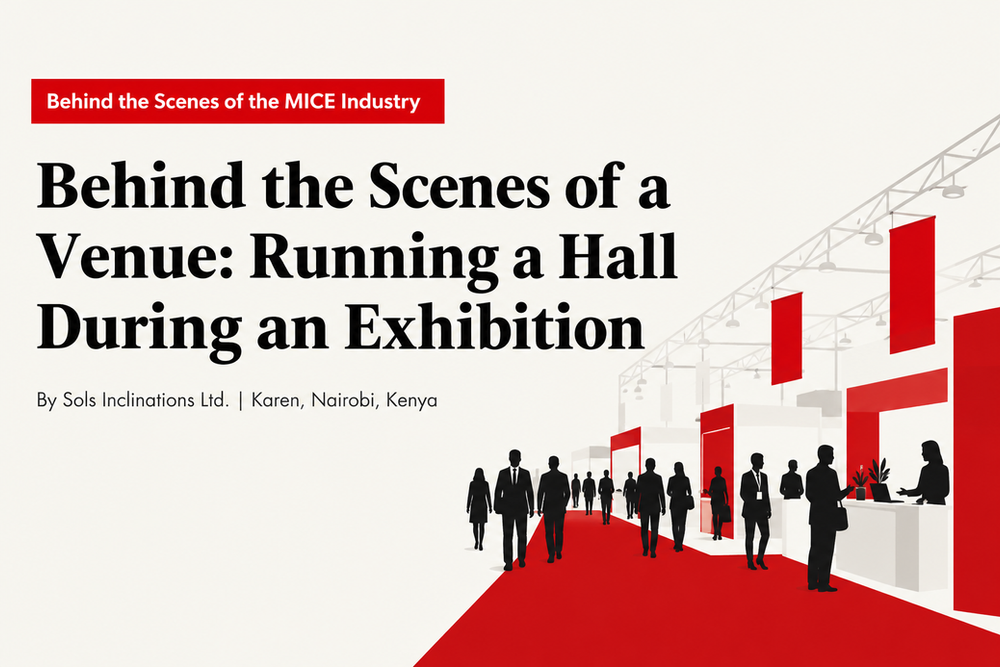
Behind the Scenes of a Venue: Running a Hall During an Exhibition
By Sols Inclinations Ltd. | Karen, Nairobi, Kenya
When an exhibition is open, the hall is full of people, stands and activity. What visitors notice is the event. What they rarely notice is the building working quietly around them.
Last week we looked at how a hall is prepared before an exhibition begins. This week we move to the days that follow, when doors are open and the venue has to keep performing from the first visitor to the last. Running a hall during an exhibition is a different kind of work from preparing it. The setup is finished, and the job is now to keep everything steady.
What a Hall Team Keeps an Eye On
A hall team does not stand still on show days. They move through the space, check on the essentials and respond when something needs attention. In a well-run venue, most of the work is prevention, because a small fault caught early never becomes a problem for an exhibitor.
Working Alongside the Organizer
A venue and an exhibition organizer share one goal, which is a show that runs well. On show days, the two teams stay in close contact. If an exhibitor reports a power problem, the organizer passes it to the hall team. If the programme changes, the hall team needs to know so the right space is ready.
Clear, quick communication is what keeps small issues small. A hall that responds promptly makes the organizer's job easier, and an organizer who shares plans early makes the hall's job easier.
The best sign of a well-run hall is that nobody has to think about it.
The Routine of a Show Day
Although every exhibition is different, the rhythm of a day in the hall is usually familiar. These are the kinds of tasks a venue team works through.
Before opening: a walk through the hall to check lighting, power, signage, washrooms and cleanliness.
While doors are open: staying visible and reachable, responding to requests and watching how people move through the space.
Deliveries and loading: managing access to the loading area so exhibitors can restock without blocking visitor routes.
Safety and security: keeping emergency routes clear and making sure the team knows the plan if something unexpected happens.
After closing: a reset of the hall, with cleaning and a check of anything that needs repair before the next day.
Why the Routine Matters
Exhibitors travel, build stands and invest in being present. A hall that stays reliable from the first day to the last protects that investment. Visitors, in turn, judge an event by how comfortable and easy it feels. Good venue operations are part of what makes an exhibition worth returning to.
For venues, this is also about reputation. Organizers and exhibitors remember how a hall performed when the pressure was on, and that memory shapes where they choose to hold their next event.
A Closing Thought
An exhibition is the result of many teams working together. Organizers plan the programme, exhibitors bring their stories and visitors bring their curiosity. The hall is the foundation that holds all of it. When it does its job well, everyone else can focus on theirs.
Planning an Exhibition or Event?
Explore more from our behind the scenes series and find out how Sols Inclinations supports events from the first idea to the final day.
This article describes general venue practice. Specific arrangements vary from one hall and one event to another. Sols Inclinations Ltd., Karen, Nairobi, Kenya.