Maonyesho
Planning Your Exhibition Stand: What First-Time Exhibitors Often Overlook
Loise Nyokabi · Sep 21, 2026
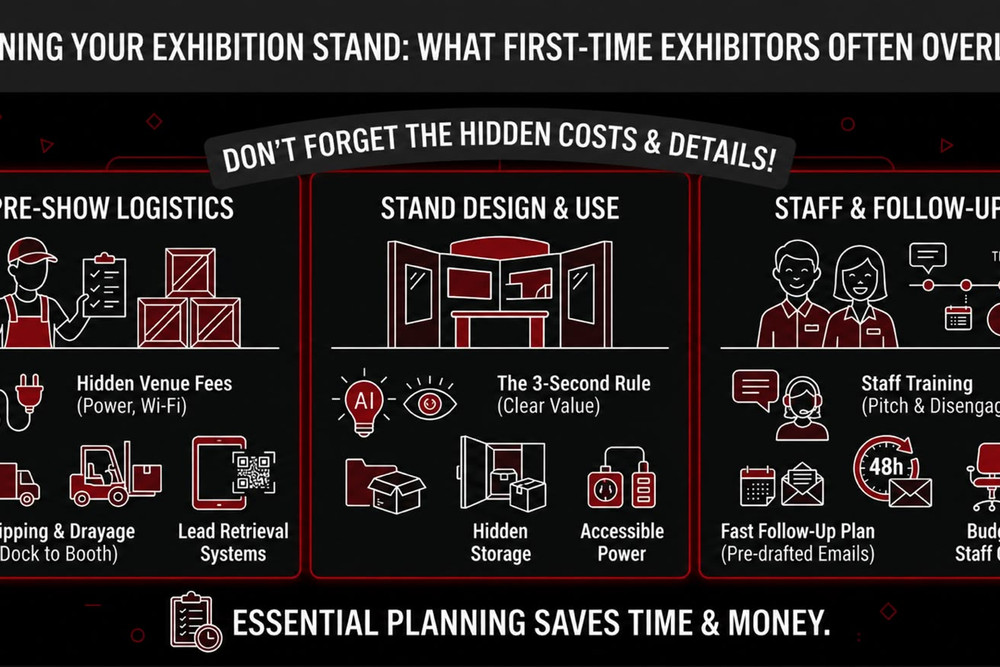
Planning Your Exhibition Stand
What first-time exhibitors often overlook
Your first exhibition is exciting, and it is easy to spend most of your planning time on how the stand will look. Design matters, but the things that catch first-time exhibitors off guard are usually quieter: a deadline in the exhibitor manual, power that was never ordered, a crate that arrives late, a team that was never briefed. This guide walks through what to check, in roughly the order it starts to matter.
Begin with a purpose, not a design
Before you choose colours or fabric, decide what the stand is for. Are you launching a product, meeting existing clients, collecting new leads, or building recognition in a new market? Choose one main goal and one supporting goal. Every later decision, from the size of the stand to who staffs it, becomes easier when the goal is clear.
Four areas that are easy to overlook
The rules
The exhibitor manual sets deadlines, height limits and branding rules. Read it before you design.
Power and internet
Sockets, extra lighting and connectivity are often ordered from the organizer in advance.
Logistics
Shipping, customs paperwork, loading times and dismantling times all need dates.
Your people
A briefed, rested team does more for your stand than extra decoration.
Read the exhibitor manual first
Organizers publish an exhibitor manual, and it is the most useful document you will receive. It normally sets out the deadlines for ordering services, the rules for stand construction and height, what branding is allowed, when you may set up and when you must dismantle. Requirements differ between organizers and venues, so treat this guide as a prompt for questions rather than a rulebook.
If you plan to hang a sign or banner above the stand, ask early about rigging points and weight limits. These are rarely something you can arrange on the day.
Power, lighting and connectivity
Count every device that needs power, from screens and lights to card machines and phone chargers, and ask what your stand includes. Extra sockets or a stronger supply are often ordered from the organizer ahead of the show.
Internet deserves the same attention. Venue Wi-Fi can be busy when many exhibitors and visitors connect at once, so ask what is available and keep a backup plan for anything that depends on a connection, such as payments or live demonstrations.
Design for a visitor who is walking past
Most visitors will give your stand a few seconds from the aisle. Make the main message readable from a distance: one clear headline on the back wall, your name, what you do, and little else. Keep the front open so people can step in easily, and leave room for real conversations. Think about access too, so that a wheelchair user or someone with a walking aid can reach you comfortably.
Getting things in, and out again
Work backwards from opening day. Shipping takes time, and cross-border shipments can involve customs paperwork, so ask your freight agent for realistic dates. Check when and where you can unload, whether a cargo lift is available, and how long you have to set up.
Label every box with your company name and stand number, and plan where empty crates will go during the show. Do not forget dismantling either, because many venues have a fixed window for clearing the hall.
Your team is part of the stand
The people at the stand shape how visitors remember you. Brief the team on your goal and on the two or three things every visitor should hear. Agree how you will capture leads before the show opens, whether that is a form, a business card or a simple notebook, so nothing is lost in the rush.
Plan rotas so that no one stands for hours without a break, and keep water, snacks and comfortable shoes in the storage area.
Before the show and after it
The show itself is only one part of your exhibition. Before it, tell your existing clients and prospects that you will be there, and try to book a few meetings in advance. Afterwards, follow up while the conversation is still fresh, and note what worked so your next stand is easier to plan.
Questions to ask the organizer before you commit
What is included in the stand price, and what must I order separately?
What are the deadlines for ordering power, internet, furniture and rigging?
Are there limits on stand height, structures and branding?
When can I set up, and when must I dismantle?
Where can goods be loaded and unloaded, and is a cargo lift available?
What internet options are available on the exhibition floor?
Is there storage for empty crates and spare materials?
Who do I contact on site if something goes wrong?
Planning to exhibit at an upcoming show?
Sols Inclinations Ltd. would be glad to talk through your plans with you.
General guidance for first-time exhibitors. Requirements, deadlines and costs differ between organizers and venues, so always follow the exhibitor manual for your event.